
The kitchen starts to hum with excitement as the scent of coconut and spices begins to waft through the air—there’s something truly magical about preparing a Thai Style Coconut Curry Shrimp Noodle Bowl. This dish is not only a feast for your taste buds but also a lifesaver for busy weeknights. With quick prep and a vibrant mix of flavors, it effortlessly transforms everyday ingredients into a surprisingly impressive meal. Imagine how tender shrimp and delicate rice noodles come together, enveloped in a creamy, fragrant curry, ready to impress anyone gathered around your table. Plus, it’s gluten-free and paleo-friendly, making it an appealing option for various dietary needs. Curious about how to whip up this enticing bowl of comfort? Let’s dive into the recipe that’s sure to become a staple in your home!
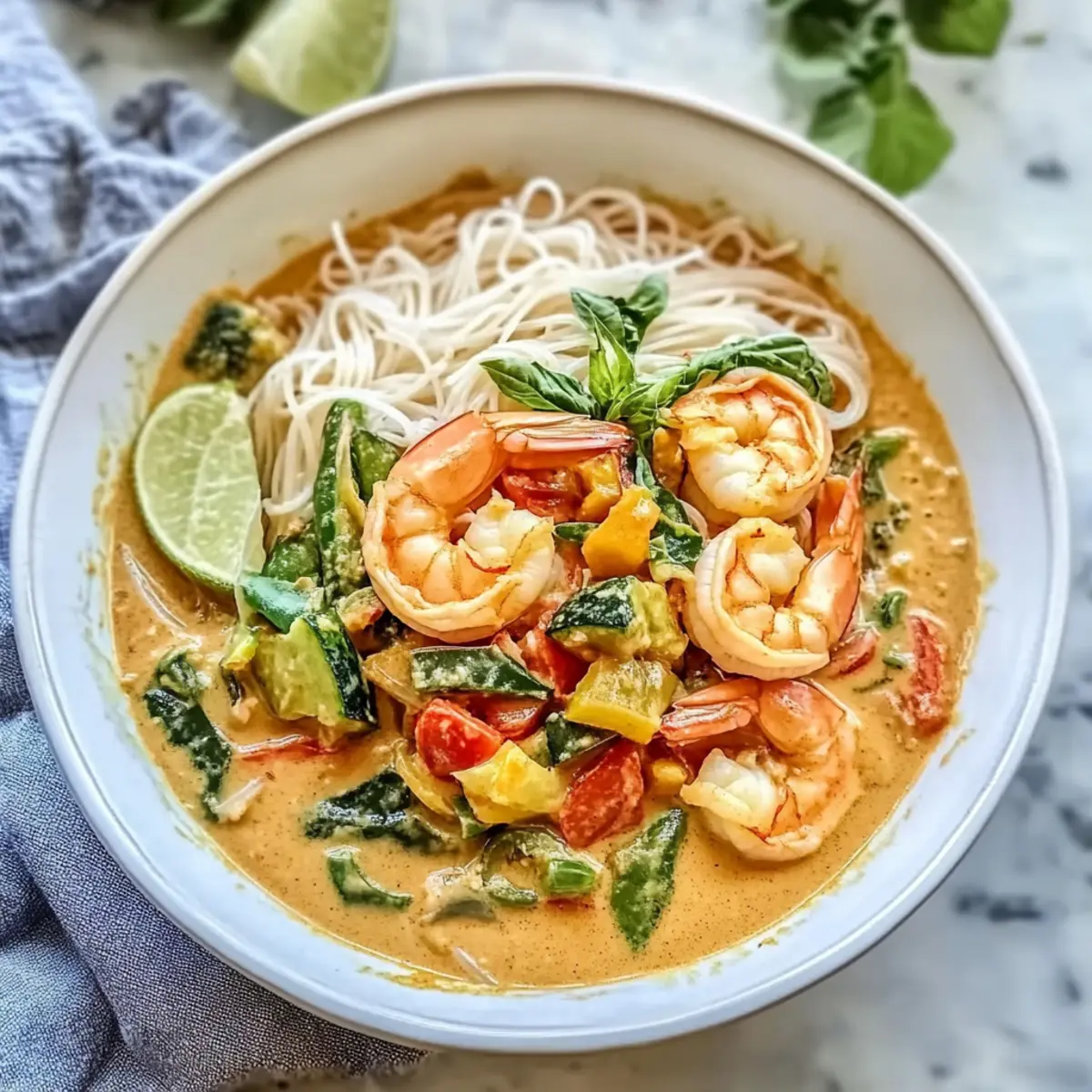
Why is Coconut Curry Shrimp Noodle Bowls a Must?
Comforting, Yet Exotic: This dish combines the warmth of a classic comfort meal with the exotic flavors of Thai cuisine, making it perfect for cozy dinners.
Quick and Easy: With simple steps and minimal prep, you can have this delicious meal on the table in no time—ideal for busy weeknights!
Flavor Explosion: The creamy coconut milk harmonizes beautifully with bold spices and tender shrimp, creating a symphony of taste in every bite.
Diet-Friendly: Gluten-free and paleo-friendly, these bowls accommodate a range of dietary preferences without sacrificing flavor.
Customizable: Feel free to swap in your favorite proteins or veggies, whether it’s chicken, tofu, or seasonal vegetables—it’s versatile and allows for creativity! Consider pairing these bowls with Spicy Coconut Noodles for an exciting flavor journey.
Coconut Curry Shrimp Noodle Ingredients
For the Curry
• Coconut Oil – High-heat cooking fat; imparts tropical aroma. Substitute: Any neutral oil can be used, but coconut oil enhances flavor.
• Raw Peeled and Deveined Shrimp – Quick-cooking protein; adds succulence to the dish. Notes: Ensure shrimp are patted dry for better sear.
• Sweet Onion – Sweet and mild; caramelizes for depth of flavor. Substitute: Yellow or red onion if sweet onion is unavailable.
• Red Bell Pepper – Adds color and mild sweetness; maintains crunch when lightly cooked. Substitute: Yellow or green bell pepper can work.
• Orange Bell Pepper – Extra sweetness and color. Substitute: Any color bell pepper or omitted if not available.
• Salt – Enhances flavor; balances sweetness. Note: Adjust to taste as it’s easy to oversalt.
• Black Pepper – Adds mild heat; brightens dish. Note: Use freshly ground for best flavor.
• Garlic (minced) – Depth and aromatic flavor. Note: Sauté briefly to avoid bitterness.
• Freshly Grated Ginger – Adds zest and warmth; cuts richness. Note: Grate fresh for best flavor.
• Red Curry Paste – Core flavoring agent; prepare it in oil to enhance its profile. Substitute: Green curry paste for a different flavor, but adjust spiciness.
• Sugar Snap Peas – Crunchy, fresh texture; adds a pop of color. Note: Add near the end to maintain crispness.
• Full-fat Coconut Milk – Richness and creaminess; forms curry base. Substitute: All light coconut milk if watching fat content.
• Light Coconut Milk – Balances richness; maintains coconut flavor. Notes: Both types can be used in equal parts for desired consistency.
For the Noodles and Garnish
• Cooked Rice Noodles – Absorbs sauce; forms hearty base. Substitute: Soba noodles or spaghetti if rice noodles aren’t available.
• Fresh Chopped Cilantro – Brightens and finishes dish. Note: Use just before serving to retain freshness.
• Green Onions (sliced) – Provides flavor contrast and color. Note: Add as a garnish for texture.
Dive into making your Coconut Curry Shrimp Noodle Bowls with these wonderful ingredients, and let the flavors transport you to a cozy Thai kitchen!
Step‑by‑Step Instructions for Coconut Curry Shrimp Noodle
Step 1: Heat the Oil
Begin by heating 2 tablespoons of coconut oil in a large skillet over medium heat. Allow the oil to melt and shimmer for about 1 minute. This will ensure even cooking and prevent sticking. Once hot, you are ready to add the shrimp.
Step 2: Sear the Shrimp
Add the raw peeled and deveined shrimp to the skillet in a single layer. Sear for about 3-4 minutes, or until the shrimp are opaque and pink, flipping halfway through for even cooking. Season lightly with salt and pepper, then remove the shrimp from the skillet and set them aside on a plate.
Step 3: Sauté the Vegetables
In the same skillet, add a bit more coconut oil if needed, and toss in the sweet onion, red bell pepper, and orange bell pepper. Cover and cook for approximately 5 minutes until the vegetables are soft and slightly caramelized, stirring occasionally. The colors should brighten, making your Coconut Curry Shrimp Noodle Bowl even more inviting!
Step 4: Aromatics and Curry Paste
Once the vegetables are softened, stir in the minced garlic, freshly grated ginger, and red curry paste. Cook for another 5 minutes, stirring continuously to prevent burning. Allow the mixture to become fragrant, as the spice will start to deepen in flavor, setting the base for your delicious curry sauce.
Step 5: Add Peas and Coconut Milk
Next, stir in the sugar snap peas and pour in the full-fat and light coconut milk. Bring the mixture to a gentle boil over medium-high heat, then immediately reduce the heat and let it simmer for about 5 minutes, covered. This combination will create a creamy, aromatic sauce that envelops the vibrant vegetables.
Step 6: Combine the Shrimp
Return the seared shrimp to the skillet, stirring well to coat with the coconut curry sauce. Cook for an additional 5 minutes, allowing the shrimp to heat through and absorb the wonderful flavors. You will notice the sauce thickening slightly, creating a luscious consistency that perfectly clings to the shrimp.
Step 7: Serve the Dish
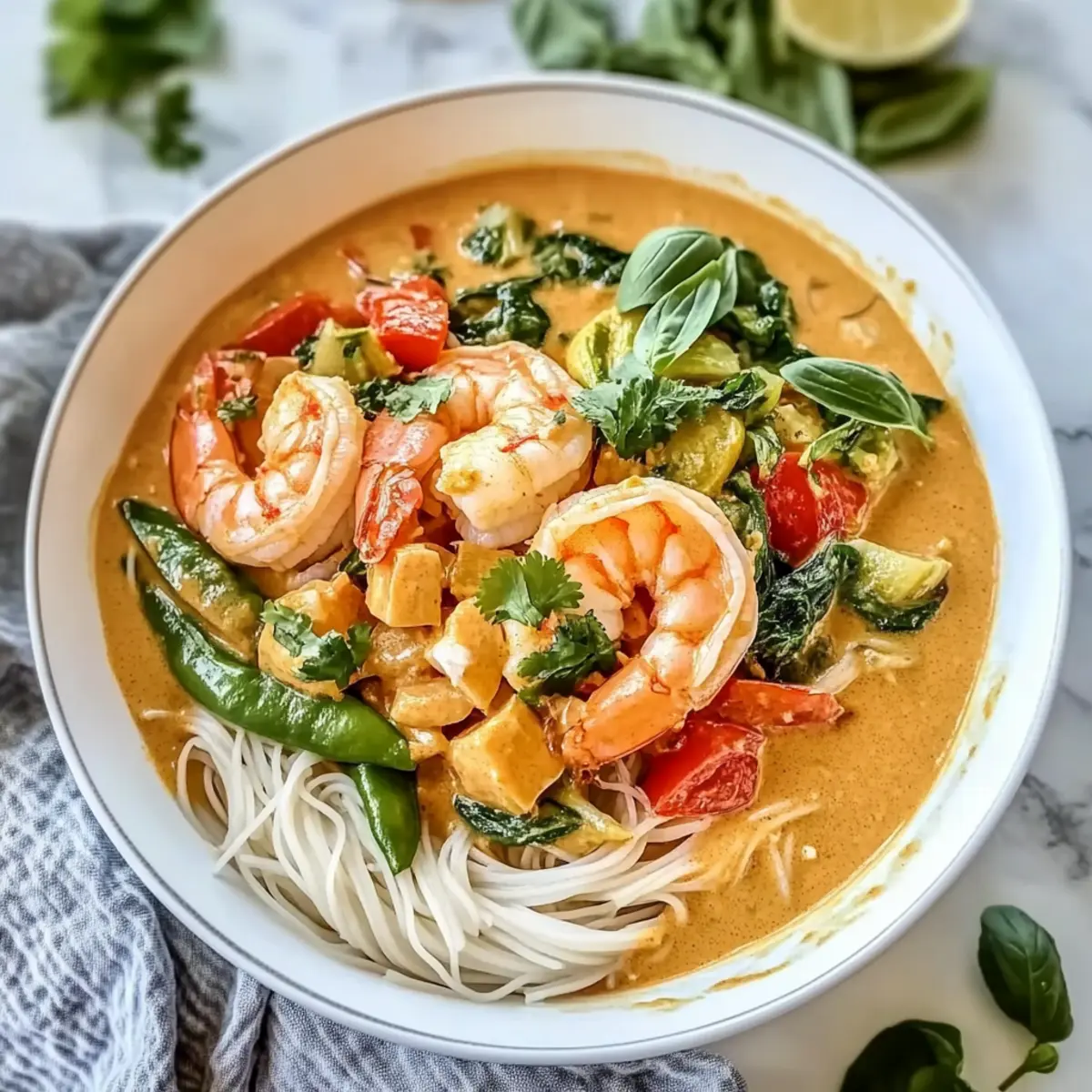
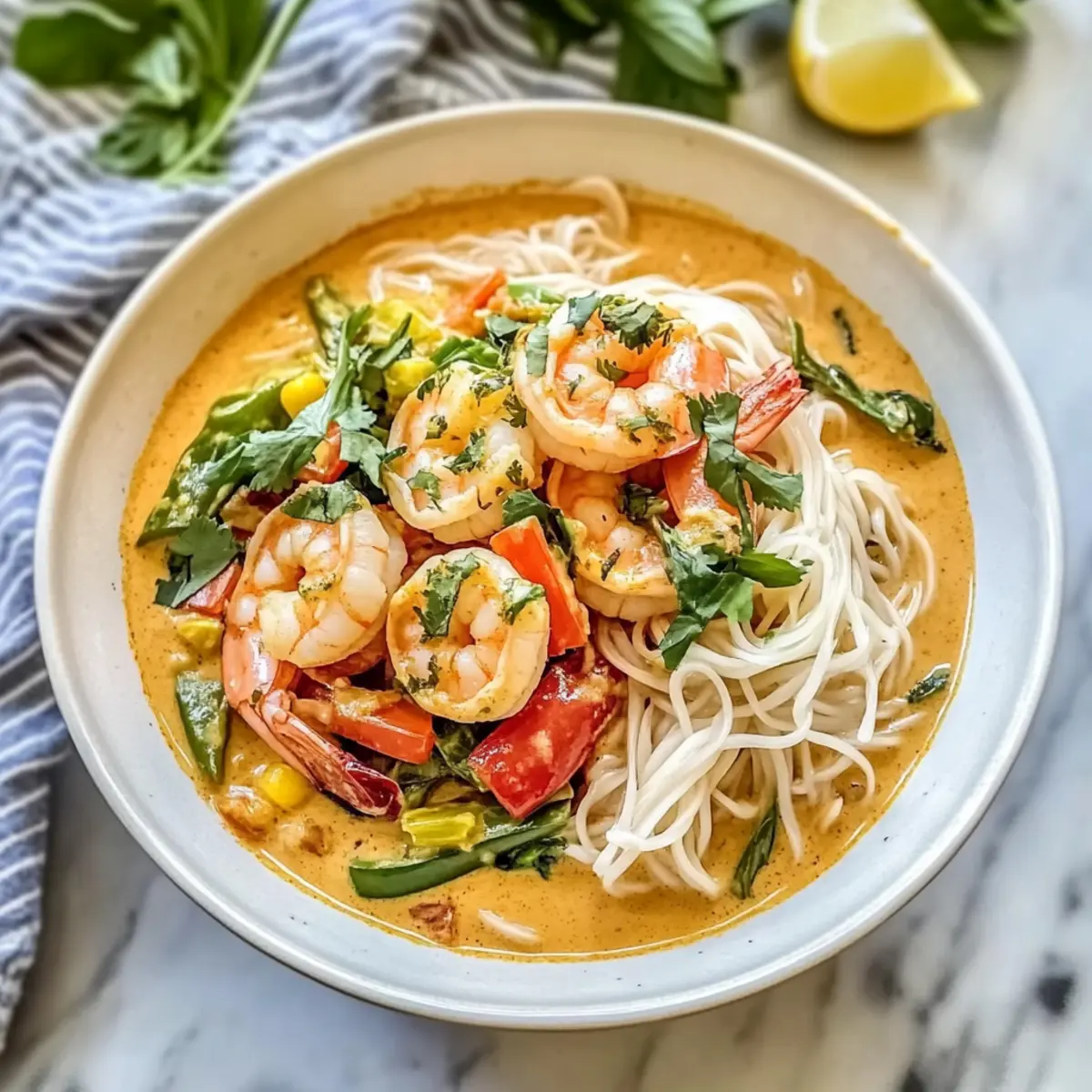
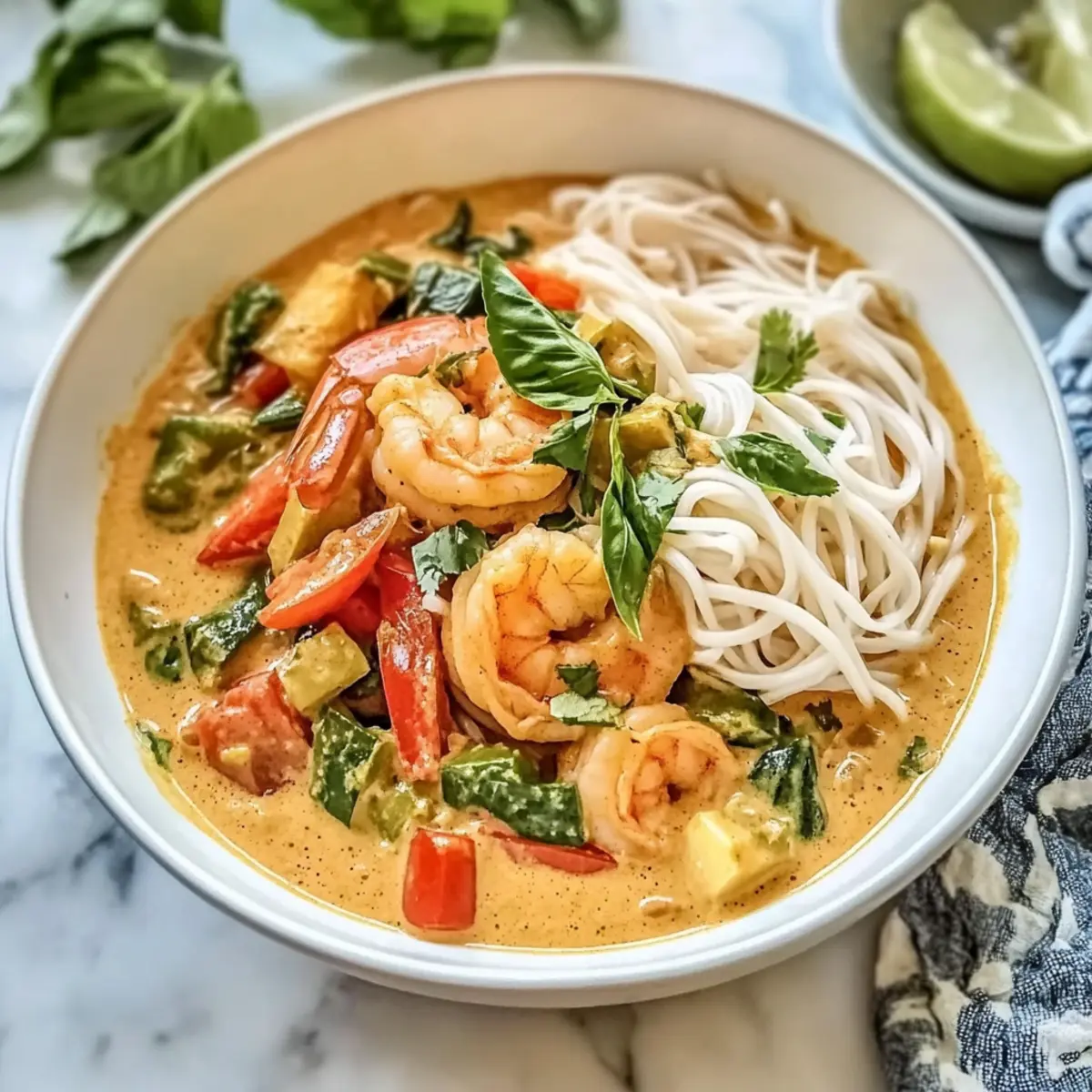
To serve your Coconut Curry Shrimp Noodle Bowls, divide the cooked rice noodles into bowls. Spoon the shrimp and vegetable curry sauce generously over the noodles. Finish with fresh, chopped cilantro and garnish with sliced green onions for a burst of color and flavor. Enjoy your cozy weeknight creation!
Make Ahead Options
These Thai Style Coconut Curry Shrimp Noodle Bowls are perfect for meal prep! You can prepare the coconut curry sauce and veggies up to 3 days in advance, allowing the flavors to meld beautifully. Simply cook your shrimp and noodles fresh on the day you plan to serve; this will ensure they remain tender and don’t overcook. To maintain quality, store the curry in an airtight container in the refrigerator and reheat gently on the stove. When you’re ready to enjoy, heat the sauce, cook the shrimp for a few minutes, and serve over warmed noodles, creating a delightful, hassle-free dinner that tastes just as delicious!
Coconut Curry Shrimp Noodle Variations
Feel free to explore these delightful twists and substitutions that will make your coconut curry shrimp noodle bowls uniquely yours!
-
Dairy-Free: Use coconut milk exclusively instead of any regular cream or milk for a rich, creamy base without dairy.
-
Protein Swaps: Substitute shrimp with chicken or tofu, allowing for different textures and flavors while still keeping the dish vibrant.
For those seeking a plant-based twist, feel free to add tofu—simply sauté it until golden for added depth.
-
Vegetable Medley: Incorporate seasonal veggies like broccoli or snap peas for an extra crunch and nutritional boost.
-
Noodle Alternatives: Swap rice noodles for quinoa or even spiralized zucchini if you’re looking for a gluten-free or low-carb option.
Quinoa will add a hearty bite and keep the dish wholesome as you savor each forkful.
-
Spice It Up: Boost the heat by adding red chili flakes or fresh jalapeños—perfect for those who crave an extra kick!
Don’t forget that varying the amount of red curry paste can also adjust spice levels to your liking.
-
Herb Garden: Experiment with fresh herbs like basil or mint instead of cilantro for a refreshing variation in flavor.
These herbs can elevate the dish, making it even more aromatic and delightful with each bite.
-
Coconut Bliss: If you’re a coconut lover, use toasted coconut flakes as a crunchy topping for added texture.
This not only enhances flavor but also gives your dish a beautiful presentation.
Feel free to let your creativity flow and enjoy these variations while indulging in the warmth of Thai-inspired cuisine! You might also enjoy Baked Cod Coconut for another comforting dish!
Expert Tips for Coconut Curry Shrimp Noodle Bowls
• Perfect Sear: Ensure your skillet is hot before adding shrimp to achieve a golden-brown crust, enhancing flavor.
• Dry Shrimp: Pat raw shrimp dry to prevent steaming. A dry shrimp ensures a better sear and a more flavorful dish.
• Curry Paste Toasting: Sauté red curry paste briefly in oil before adding liquids. This develops a deeper flavor and elevates your Coconut Curry Shrimp Noodle Bowls.
• Vegetable Timing: Add sugar snap peas and peppers later in the cooking process to maintain their crisp texture and vibrant colors.
• Adjust Spice: For a milder dish, start with less red curry paste and taste as you go. You can always add more to suit your heat preference!
How to Store and Freeze Coconut Curry Shrimp Noodle Bowls
Fridge: Store refrigerated in an airtight container for up to 3 days. Keep the curry separate from the noodles to prevent sogginess.
Freezer: For longer storage, freeze the coconut curry (without noodles) in a freezer-safe container for up to 2 months.
Reheating: Thaw overnight in the fridge, then reheat the curry on the stovetop over low heat. Add a splash of coconut milk to restore creaminess, then serve over freshly cooked noodles.
Make-Ahead Tip: Prepare the curry a day ahead for deeper flavors, but cook noodles fresh while serving the Coconut Curry Shrimp Noodle Bowls for best texture.
What to Serve with Coconut Curry Shrimp Noodle Bowls?
Indulging in a bowl of creamy, aromatic shrimp noodles sets the stage for an unforgettable feast.
-
Crispy Spring Rolls: These little bundles of joy add a delightful crunch, offering a contrast to the creamy noodles while introducing fresh vegetables.
-
Steamed Jasmine Rice: This fluffy rice soaks up the curry sauce beautifully, balancing the dish with its comforting softness and subtle aroma.
-
Chilled Cucumber Salad: A refreshing salad with crunchy cucumbers and a tangy dressing brightens your meal, making each bite burst with freshness.
-
Mango Sticky Rice: A sweet dessert with sticky rice and ripe mango will end your feast on a light, tropical note, reminiscent of Thai flavors.
-
Thai Iced Tea: Creamy, sweet, and refreshingly spiced, this drink complements the dish while enhancing the overall dining experience.
-
Roasted Vegetable Medley: Adding roasted seasonal veggies provides a delightful caramelized flavor and extra nutrients, beautifully contrasting the bowl’s textures.
-
Sesame Noodles: These sweet and savory noodles can serve as an excellent side, adding another comforting layer to your meal without overpowering the main attraction.
-
Garlic Bread: For those who love a touch of home, crispy garlic bread is ideal for sopping up the flavorful curry sauce, adding a touch of familiarity to this exotic dish.
Coconut Curry Shrimp Noodle Bowls Recipe FAQs
How do I choose the best shrimp for this recipe?
Absolutely! Fresh shrimp should have a slight ocean scent and be translucent with a firm texture. Avoid shrimp with dark spots or a fishy odor. If using frozen shrimp, ensure they’re fully thawed before cooking for optimal texture and flavor.
What’s the best way to store leftover Coconut Curry Shrimp Noodle Bowls?
For sure! Store leftovers in an airtight container in the fridge for up to 3 days. To prevent the noodles from becoming mushy, keep them separate from the curry. When storing, you can lightly coat the noodles with a bit of oil to help maintain their texture.
Can I freeze the Coconut Curry?
You absolutely can! To freeze, let the coconut curry cool completely. Transfer it to a freezer-safe container, leaving some space at the top for expansion, then seal it tightly. It can be stored for up to 2 months. When ready to eat, thaw it overnight in the fridge and reheat gently on the stovetop.
What can I do if the curry is too spicy?
Very! If your curry ends up spicier than desired, there are a couple of ways to mellow the heat. You can add a little more coconut milk for creaminess, which will help dilute the spice. Alternatively, incorporate a spoonful of sugar to balance out the flavors. Always taste as you adjust!
Are there any dietary considerations for pets or allergies?
Great question! This dish contains shellfish, which is a common allergen, so be sure to inform guests if serving. If you have pets, avoid sharing any leftovers with them, especially if they have a history of shellfish allergies. Always check with your veterinarian before sharing home-cooked meals.
How can I customize the veggie ingredients in the curry?
Absolutely wonderful query! You can swap out the sugar snap peas for other vegetables like carrots, zucchini, or broccoli based on your preferences and what you have on hand. Just keep in mind cooking times can vary; add denser vegetables earlier in the cooking process or slice them thinner for quicker cooking.
Coconut Curry Shrimp Noodle Bowls for Cozy Weeknight Dinners
Ingredients
Equipment
Method
- Heat the coconut oil in a large skillet over medium heat for about 1 minute until it melts and shimmers.
- Add the shrimp in a single layer and sear for about 3-4 minutes until they are opaque and pink. Season with salt and pepper.
- In the same skillet, add more coconut oil if needed, and cook the sweet onion, red bell pepper, and orange bell pepper for approximately 5 minutes.
- Stir in minced garlic, freshly grated ginger, and red curry paste, cooking continuously for another 5 minutes.
- Add the sugar snap peas and pour in full-fat and light coconut milk. Bring to a gentle boil, then reduce heat and simmer for about 5 minutes.
- Return the seared shrimp to the skillet and cook for an additional 5 minutes until heated through.
- Serve by dividing the cooked rice noodles into bowls, spooning the shrimp curry over them, and garnishing with cilantro and green onions.
Leave a Reply