
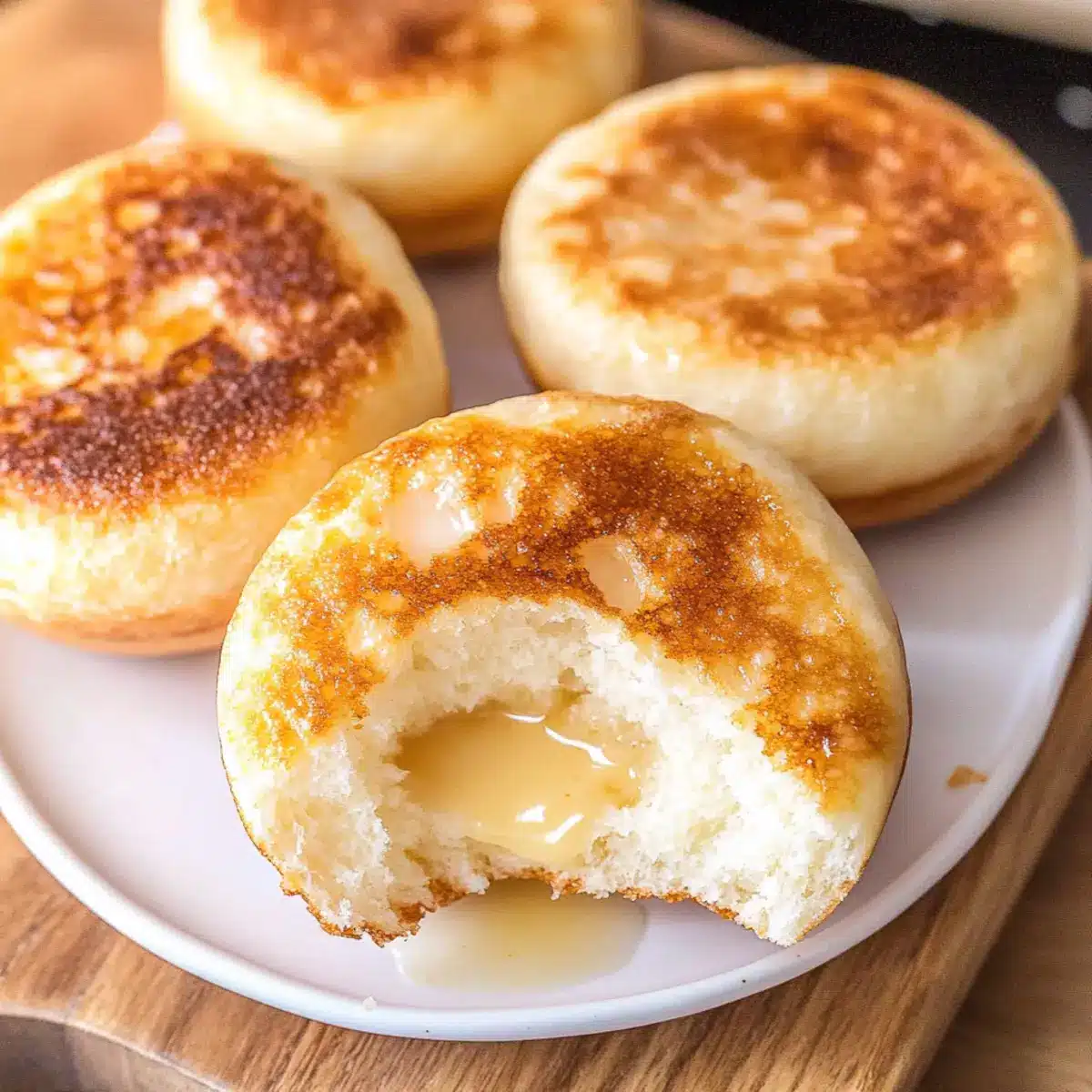
As I stood in my cozy kitchen, the warm aroma of freshly baked bread wrapped around me like a soft blanket. Today, I’m diving into the delightful world of homemade English muffins, a breakfast staple that I believe everyone should try making from scratch. This Homemade English Muffin Recipe produces soft and chewy muffins, complete with those iconic nooks and crannies just begging for a generous slather of butter or jam. Not only is this recipe easy enough for anyone to master, but it also allows you to whip up a warm breakfast treat that far surpasses anything you can find at the store. Plus, with options for both baking and pan-frying, you can customize the process to fit your morning routine. Ready to elevate your breakfast game and impress your family? Let’s get started!

Why Make Homemade English Muffins?
Freshness Guaranteed: Nothing beats the aroma of warm English muffins fresh from your kitchen! You control the ingredients, ensuring every bite is deliciously homemade.
Versatile Cooking Methods: Choose between pan-frying for a crispy crust or baking for a hands-off approach—both are equally delightful!
Customizable Flavors: Adding your twist with mix-ins like dried fruits or herbs makes each batch unique and fun to explore.
Simple Make-Ahead Options: Prepare the dough in advance for those busy mornings, allowing you to enjoy your homemade muffins whenever you crave them!
Comfort Food Appeal: Perfectly toasted, these muffins are fantastic for breakfast or a light snack, a perfect partner for your favorite spreads or as the base for eggs Benedict. If you love breakfast treats, don’t miss out on our Homemade Garlic Rosemary for more delicious options!
Homemade English Muffin Ingredients
For the Dough
- Warm Water – Hydrates the yeast; make sure it’s warm, not hot, to keep the yeast happy.
- Instant Dry Yeast – Acts as the leavening agent; can swap with active dry yeast if activated in water first.
- Granulated Sugar – Fuels the yeast, kickstarting fermentation; raw sugar is a fine substitute.
- All-Purpose Flour – Forms the structure of your muffins; substitute with whole wheat flour for a denser bite, but hydrate more if needed.
- Salt – Enhances flavor and nurtures yeast activity; no substitutes recommended here.
- Milk – Adds richness; can be replaced with almond milk or any non-dairy alternative for a lactose-free version.
- Butter – Provides moisture and flavor; use melted, cooled butter for the best results, whether salted or unsalted.
For Assembly and Cooking
- Cornmeal – Prevents sticking and adds texture; while optional, it’s highly recommended for authentic muffins.
Feel free to play with this Homemade English Muffin recipe to suit your taste buds and enjoy the delicious journey of baking!
Step‑by‑Step Instructions for Homemade English Muffin Recipe
Step 1: Prepare Yeast Mixture
In a medium bowl, combine 1 cup of warm water (about 110°F), 2 tablespoons of granulated sugar, and 2 teaspoons of instant dry yeast. Stir gently and let the mixture sit for 3 to 4 minutes until it becomes frothy. This foaming action indicates that your yeast is alive and ready, adding the perfect lift to your homemade English muffins.
Step 2: Mix Dough
Once your yeast is bubbling, add 4 cups of all-purpose flour and 1 teaspoon of salt to the bowl. Gradually pour in 1 cup of milk and 4 tablespoons of melted butter, mixing until a sticky dough forms. Use a wooden spoon or your hands to bring everything together, ensuring the ingredients are fully combined for a rich, cohesive dough.
Step 3: First Rise
Transfer the dough to a lightly floured surface and knead it gently for about 5 minutes until it’s smooth and elastic. Place the kneaded dough back into a greased bowl, cover it with plastic wrap, and let it rise in a warm place for 60 to 90 minutes, or until it’s doubled in size. This initial rise is crucial for developing the nooks and crannies of your homemade English muffins.
Step 4: Shape Muffins
Once the dough has risen, gently punch it down to release the air. On a floured surface, roll the dough to a thickness of about ½ inch. Use a 3-inch round cutter to cut out your muffins, lifting them carefully to maintain their airy structure. Place them on a cornmeal-dusted baking sheet to prevent sticking and add extra texture.
Step 5: Second Rise
Cover the shaped muffins with a kitchen towel and let them rise again for an additional 45 minutes. This second rise allows the muffins to puff up, ensuring they will be light and airy once cooked. Keep an eye on them; they should look noticeably fuller and rounded by the end of this time.
Step 6: Cooking
Heat a non-stick pan or cast-iron skillet over medium heat and cook the muffins covered for about 5 minutes on one side. Carefully flip them over and cook for another 4 to 5 minutes until they are golden brown and cooked through, reaching an internal temperature of 190°F. This stovetop method creates a delightful crust while retaining a soft center, hallmark traits of a perfect homemade English muffin.
Step 7: Cool
Once cooked, transfer the muffins to a wire rack to cool completely. This step allows them to set properly and enhances their texture. After cooling, your homemade English muffins are ready for toasting and adding your favorite spreads, making for a delightful breakfast treat!
How to Store and Freeze Homemade English Muffins
Room Temperature: Store homemade English muffins in an airtight container at room temperature for up to 3–4 days. This keeps them fresh and soft for snacking or breakfast.
Fridge: If you’re not planning to eat them within a few days, place the muffins in the fridge for up to 1 week. Wrap them individually in plastic wrap or foil to prevent drying out.
Freezer: For longer storage, freeze muffins individually by wrapping them tightly in plastic wrap, then placing them in a freezer-safe bag. They’ll remain fresh for up to 3 months.
Reheating: When you’re ready to enjoy, simply toast the muffins straight from frozen or thaw them overnight in the fridge. A light toast brings back that delightful freshness!
Homemade English Muffin Recipe Variations
Feel free to explore these delightful twists that’ll cater to your taste buds and make your homemade English muffins truly your own!
-
Whole Wheat: Swap out all-purpose flour for whole wheat flour for a nuttier flavor and added fiber. Just remember to add a bit more liquid to keep the dough moist.
-
Herbed Delight: Incorporate fresh or dried herbs, like rosemary or thyme, into the dough for an aromatic touch that elevates your breakfast experience. Each bite will be infused with flavor!
-
Sweet Cinnamon: Mix a tablespoon of ground cinnamon and a dash of sugar into the dough for a sweet version that pairs perfectly with morning coffee or tea.
-
Cheesy Goodness: Fold in shredded cheddar or your favorite cheese into the dough before the first rise. This savory addition transforms your English muffins into a decadent treat. Imagine gooey cheese melting upon toasting!
-
Spicy Kick: Add a pinch of cayenne pepper or finely chopped jalapeños for some heat. These spicy muffins are irresistible when topped with avocado or a fried egg.
-
Dried Fruit: Sprinkle in dried cranberries or raisins for a sweet fruity burst. These muffins are delightful smeared with cream cheese for a sweet breakfast twist.
-
Baking Option: For those preferring an oven-baked method, bake your muffins at 375°F in muffin rings for a more uniform shape and crust. It’s a great alternative that maintains that fluffy interior.
-
Freezing Ahead: Make a big batch and freeze your muffins individually. Thaw them overnight for quick breakfasts, just like having fresh ones every morning—perfect for busy schedules!
Each variation invites you to unleash your inner chef. If you’re looking for more creative recipes to enjoy, don’t forget to try our Homemade Chocolate Milk or indulge in the richness of Cornbread Casserole. Happy baking!
What to Serve with Homemade English Muffins?
Warm, toasty, and delightful, these muffins beckon for the perfect companions to enhance your breakfast experience.
- Creamy Scrambled Eggs: Rich and fluffy, scrambled eggs provide a luscious contrast to the chewy texture of the muffins.
- Fresh Fruit Salad: A vibrant mix of seasonal fruits adds brightness and freshness, balancing the hearty flavors of your muffins.
- Avocado Toast: The creamy richness of smashed avocado layered on toasted muffins makes for a trendy, satisfying twist on a classic breakfast.
- Homemade Jam: Sweet, fruity jam slathered on warm muffins creates a comforting, nostalgic flavor combination that’s simply irresistible.
Consider mixing textures and flavors! Pair your muffins with crispy bacon or smoked salmon for a savory touch that will delight your taste buds.
- Sweet Maple Syrup: Drizzling warm syrup over your muffins satisfies that sweet tooth while enhancing their glorious nooks and crannies.
- Herbed Cream Cheese: Spread a layer of tangy herbed cream cheese for a deliciously savory option that adds depth to your muffin experience.
- Coffee or Tea: A steaming cup of your favorite brew rounds out the meal, making your breakfast feel like a cozy weekend retreat, any day of the week.
Make Ahead Options
These Homemade English Muffins are perfect for meal prep enthusiasts! You can prepare the dough up to 24 hours in advance by mixing everything and allowing it to rise, then refrigerating the covered bowl overnight. This slows the fermentation process, enhancing flavor without compromising quality. When you’re ready to enjoy, simply shape the muffins and allow them to rise for about 45 minutes before cooking. If you prefer even more convenience, you can fully cook them and freeze the muffins individually for up to 3 months; just thaw overnight in the fridge and toast before serving for that delightful, fresh-baked taste. With these make-ahead tips, you’ll have soft, chewy muffins ready to elevate your busy mornings!
Tips for the Best Homemade English Muffins
-
Measure Carefully: Use a kitchen scale for ingredients like flour; inconsistent measurements can lead to dense muffins.
-
Maintain Warmth: Ensure dough rises in a warm area; cold temperatures can inhibit yeast, preventing that delightful lightness in your homemade English muffins.
-
Don’t Rush the Rises: Allow the dough to rise fully; skipping this step can result in heavy, undercooked muffins.
-
Watch the Heat: Cook muffins at a steady medium heat; cooking too fast may brown the outside while leaving the inside doughy.
-
Experiment with Mix-Ins: Add flavors like herbs or spices during mixing for personalized muffins. Avoid excessive additions that could alter the dough’s balance.
-
Cool Completely: Let the muffins cool before slicing; this helps maintain their structure and prevents them from becoming gummy inside.

Homemade English Muffins Recipe FAQs
How do I know if my yeast is fresh?
To check if your yeast is still active, mix it with warm water and sugar as directed in the recipe. If it foams up within 3–4 minutes, congratulations, your yeast is alive and ready! If there’s no reaction, it may be time to grab a new packet.
What’s the best way to store homemade English muffins?
Store your homemade English muffins in an airtight container at room temperature for up to 3–4 days. If you want to keep them longer, refrigerate them for up to 1 week, or freeze them for up to 3 months. Just remember to wrap them well to prevent drying out!
Can I freeze the dough for homemade English muffins?
Absolutely! After your first rise, you can freeze the dough. Shape the muffins but don’t let them rise for the second time. Wrap them tightly and freeze. When you’re ready to bake, let them thaw in the refrigerator and then proceed with the second rise and cooking instructions.
My muffins turned out flat; what did I do wrong?
Flat muffins can often result from not allowing enough time for the dough to rise. Make sure your dough doubles in size during the first rise, and don’t skip the second rise! Also, check that your yeast is fresh, as expired yeast won’t create the lift you want.
Are homemade English muffins suitable for people with dietary restrictions?
You can make your homemade English muffins gluten-free by using a blend of gluten-free flour, ensuring it’s specifically designed for yeast breads. For a lactose-free version, substitute the milk with almond or any plant-based milk. Always check for individual ingredient allergies as well!
What’s the best way to reheat frozen muffins?
To enjoy your frozen muffins, simply pop them in the toaster straight from the freezer for a quick warm-up, or let them thaw overnight in the refrigerator and toast them lightly the next morning. This refreshes their delightful texture just like when they were freshly baked!

Homemade English Muffin Recipe: Soft, Chewy, and Irresistible
Ingredients
Equipment
Method
- In a medium bowl, combine warm water, granulated sugar, and instant dry yeast. Stir gently and let sit for 3 to 4 minutes until frothy.
- Add all-purpose flour and salt to the yeast mixture. Gradually pour in milk and melted butter, mixing until a sticky dough forms.
- Knead the dough on a lightly floured surface for about 5 minutes until smooth and elastic. Place in a greased bowl, cover with plastic wrap, and let rise in a warm place for 60 to 90 minutes until doubled in size.
- Once risen, punch the dough down and roll to a thickness of about ½ inch. Cut out muffins with a 3-inch round cutter and place them on a cornmeal-dusted baking sheet.
- Cover the shaped muffins with a kitchen towel and let them rise for another 45 minutes.
- Heat a non-stick pan over medium heat and cook the muffins, covered, for about 5 minutes on one side. Flip and cook for another 4 to 5 minutes until golden brown and cooked through.
- Transfer the muffins to a wire rack to cool completely.
Leave a Reply