
As I was wandering through the vibrant streets of Seoul, the enticing aroma of sizzling beef wafted through the air, promising a dish that is pure comfort. This Korean Beef Bulgogi Rice Bowl with Quick Pickled Veggies is an homage to that unforgettable flavor experience, bringing it straight to your kitchen in about 30 minutes. Packed with succulent marinated beef and topped with crunchy, tangy veggies, this easy meal is not only quick but also a delightful crowd-pleaser, making it perfect for busy weeknights. Picture a cozy bowl that’s bursting with tastes and textures; it’s the answer to your craving for homemade food that doesn’t compromise on flavor. Are you ready to elevate your dinner game with this delightful dish? Let’s dive in!
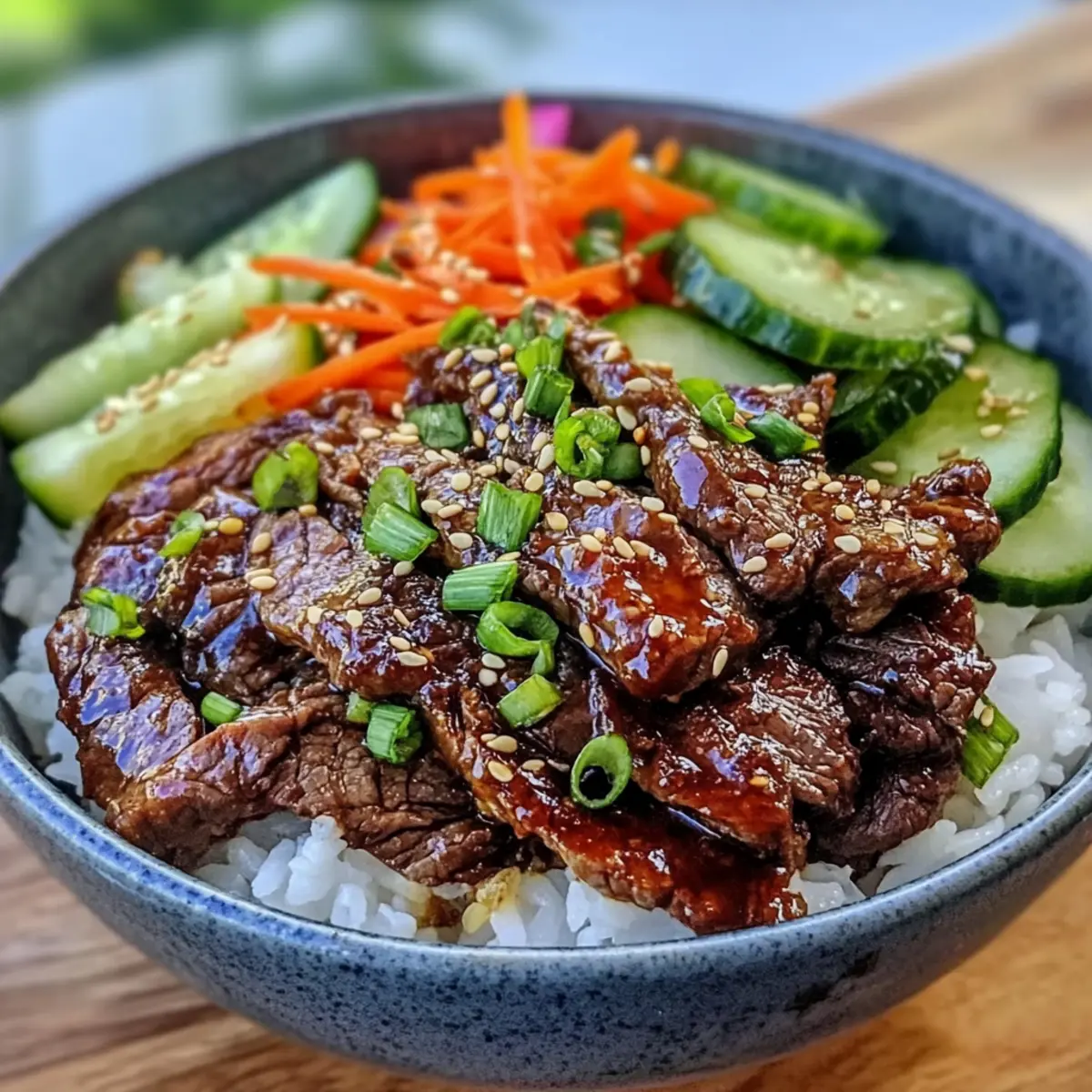
Why should you try this Korean dish?
Simplicity: This recipe comes together in just 30 minutes, making it perfect for those busy weeknights.
Flavor Explosion: The sweet-savory marinated beef and crunchy pickled veggies create a delightful balance that will have your taste buds dancing.
Versatile & Adaptable: Easily substitute proteins or spice things up with optional gochujang for a kick.
Crowd-Pleasing Appeal: Ideal for families or gatherings, this dish has something for everyone, reminiscent of your favorite Korean takeout without the wait!
Healthier & Homemade: Enjoy a comforting meal that’s not only delicious but can also be tailored to accommodate gluten-free diets with tamari.
Looking for more delicious rice bowl recipes? Check out Chicken Rice Bowls or try the vibrant flavors of Egg Roll Bowl for a change of pace!
Korean Beef Bulgogi Rice Bowl Ingredients
• Discover the essentials to create this fantastic dish!
For the Beef Marinade
• Ribeye or Sirloin Beef – Tender cuts are loved for quick cooking and rich flavor; if you can’t find them, freeze for easier slicing.
• Low-sodium Soy Sauce – The salty base for marinating; tamari can easily substitute to make this gluten-free.
• Brown Sugar – Adds a touch of sweetness while enhancing caramelization for a perfect glaze.
• Fresh Garlic – Essential for depth of flavor; avoid jarred varieties as they may turn bitter.
• Fresh Ginger – Contributes warmth and freshness; frozen grated ginger can be a handy backup.
• Sesame Oil – A must for that authentic nutty aroma; use regular for cooking and toasted for finishing touches.
• Green Onions – Brightens the dish and adds a fresh touch; these are an indispensable garnish in Korean cooking.
For the Quick Pickles
• Carrots and Cucumbers – Perfect for quick pickling; feel free to swap for radish or daikon for a crunchy twist.
• Rice Vinegar – Provides the tangy component for quick pickles; you can adjust the vinegar type based on what you have at home.
• Sugar – Helps balance the acidity of the vinegar in your quick pickles.
• Salt – Essential for enhancing the flavor of the veggies.
• Water – To dissolve the sugar and salt, creating that perfect brine.
For the Rice Bowl
• Rice (Short Grain or Jasmine) – Short grain is ideal for its sticky texture, but jasmine rice makes a great alternative in a pinch.
With these key ingredients for your Korean Beef Bulgogi Rice Bowl, you are set to enjoy a meal that’s not just easy but also bursting with flavor!
Step‑by‑Step Instructions for Korean Beef Bulgogi Rice Bowl
Step 1: Quick Pickling
Begin by peeling and thinly slicing your carrots and cucumbers. In a small saucepan, combine rice vinegar, sugar, salt, and water over medium heat. Stir the mixture until the sugar and salt fully dissolve into a brine, about 2-3 minutes. Once dissolved, pour this hot brine over the sliced vegetables, ensuring they’re all submerged. Allow them to pickle at room temperature as you prepare the rest of the dish.
Step 2: Marinate Beef
In a mixing bowl, whisk together low-sodium soy sauce, brown sugar, minced garlic, grated ginger, sesame oil, and chopped green onions to create a flavorful marinade for your beef. Thinly slice your ribeye or sirloin against the grain for tenderness. Add the beef to the marinade, ensuring every piece is well-coated. Let it marinate for at least 10 minutes while you move on to cooking the rice.
Step 3: Cook Rice
Prepare your rice according to the package instructions, using either short grain or jasmine rice for a wonderful texture. Typically, this should take about 15-20 minutes. Rinse the rice under cold water first to remove excess starch, which helps achieve the perfect sticky consistency. Once cooked, keep it covered to retain warmth and freshness while you finish the other components of your Korean Beef Bulgogi Rice Bowl.
Step 4: Sear Beef
Preheat a large skillet over medium-high heat until hot, then drizzle in a touch of oil. Working in batches, add the marinated beef to the skillet without crowding the pan. Sear the beef for about 2 minutes without stirring to achieve a nice caramelized crust. Once browned, flip the pieces and cook for an additional 2-3 minutes until the beef is tender and glossy. Remove from the skillet and set aside, keeping warm.
Step 5: Assemble Bowls
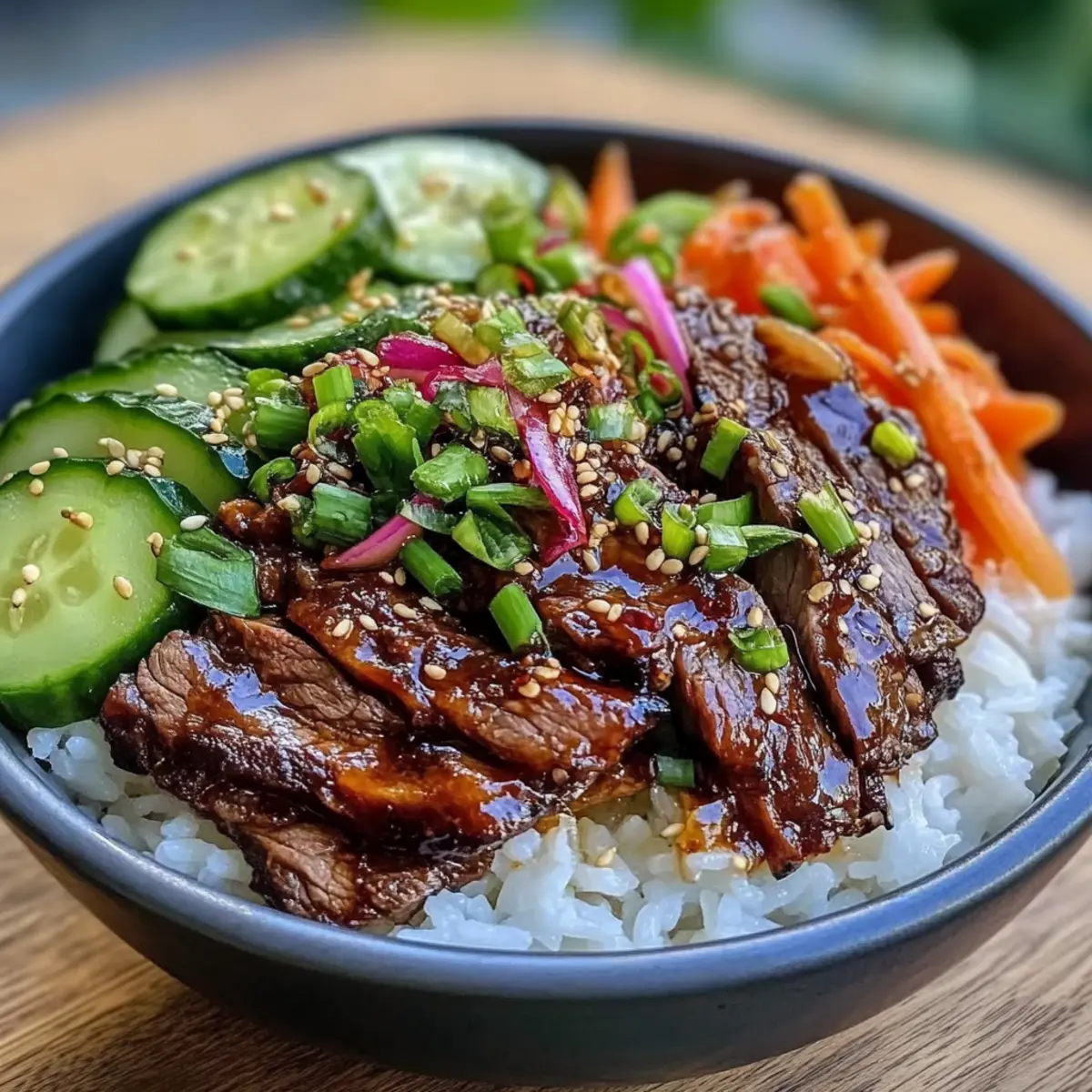
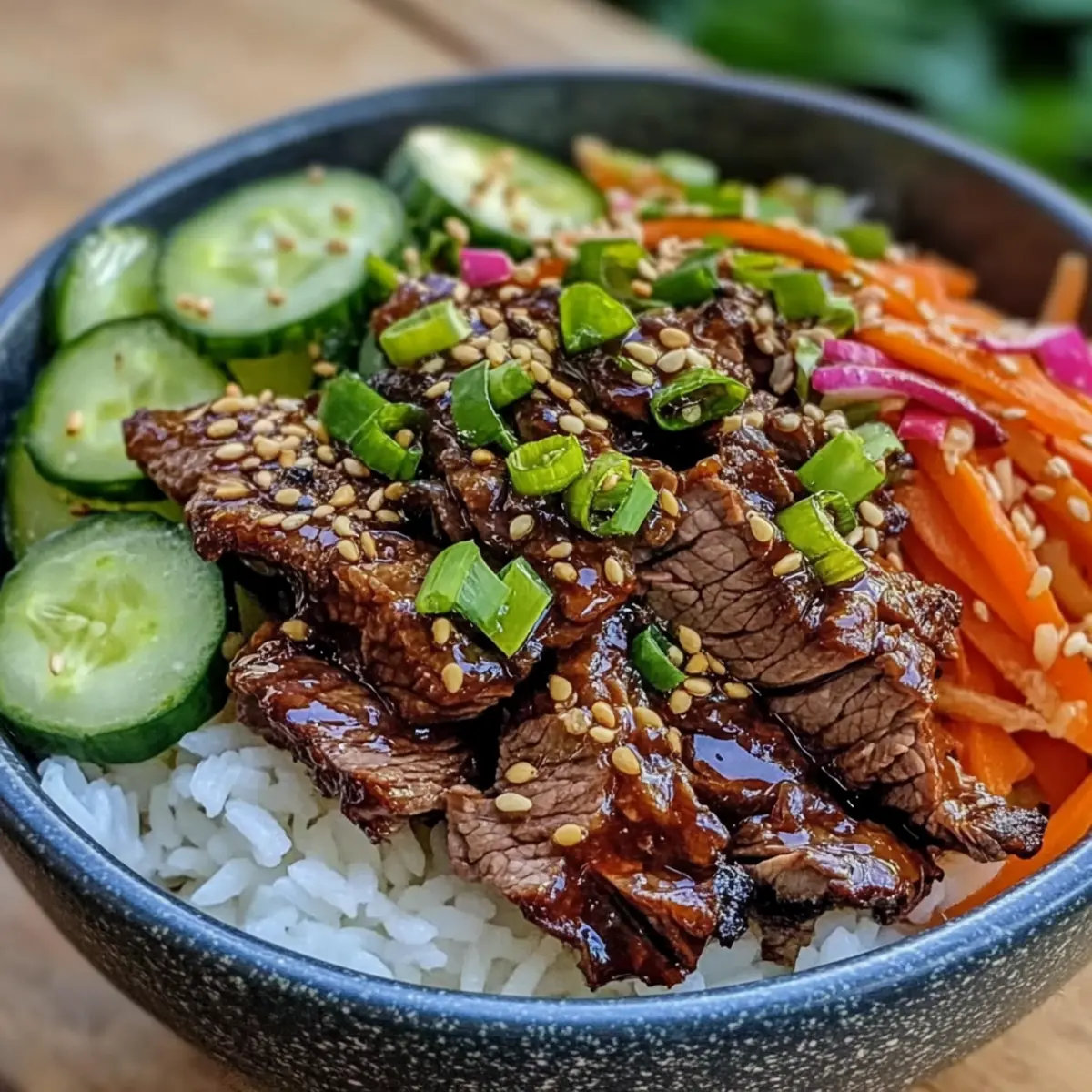
To bring your Korean Beef Bulgogi Rice Bowl together, start by serving a generous portion of warm rice into bowls. Top the rice with the beautifully seared beef, allowing the sweet-savory glaze to drizzle over. Add a hearty helping of the quick pickled vegetables on top for that perfect crunch. For an extra touch, sprinkle with additional chopped green onions and sesame seeds. Serve warm, and enjoy this delightful homemade meal!
Make Ahead Options
These Korean Beef Bulgogi Rice Bowls are perfect for meal prep enthusiasts! You can marinate the beef up to 24 hours in advance; this allows the flavors to deepen while keeping the meat tender. Additionally, the quick pickled veggies can be prepared a day ahead and stored in the refrigerator, providing a refreshing crunch when it’s time to serve. To maintain the quality, store the marinated beef and pickled veggies in separate airtight containers. When you’re ready to enjoy your meal, cook the marinated beef in a hot skillet for just a few minutes, prepare your rice fresh, and assemble your bowls for a delicious homemade dinner that feels effortless!
Korean Beef Bulgogi Rice Bowl Variations
Customize your dish with these fun twists that will add your personal touch to every bite!
-
Spicy Kick: Stir in gochujang for a fiery flavor boost in your marinade. This adds a delightful heat that elevates the dish beautifully.
-
Vegetarian Option: Swap the beef for mushrooms or marinated tofu for a luscious and satisfying plant-based alternative. The mushrooms soak up the savory marinade perfectly, making every bite delicious!
-
Different Crunch: Instead of cucumbers and carrots, try radishes or daikon for a unique pickled veggie crunch. Their crispness brings a delightful twist to your bowl.
-
Gluten-Free Delight: Use tamari as a gluten-free substitute for soy sauce. With this easy swap, you can cater to dietary needs without sacrificing flavor.
-
Fried Egg Topper: Top your bulgogi with a fried egg for added richness and an inviting touch of creaminess. The yolk breaks open and enhances every mouthful.
-
Flavorful Rice: Cook your rice with coconut milk instead of water for a subtly sweet, creamy base. It’s an unforgettable flavor combination that complements the savory beef.
-
Herbburst: Mix in fresh herbs like cilantro or mint just before serving for a refreshing and aromatic lift. Their brightness cuts through the richness of the beef beautifully.
This recipe is meant to be flexible, so don’t hesitate to play around with the ingredients and add your own personality to it! For more delicious rice bowl ideas, try out Corn Chicken Bowl or explore the bold tastes of Bang Fried Rice.
Expert Tips for Korean Beef Bulgogi Rice Bowl
• Marinate for Flavor: Allow the beef to marinate for at least 10 minutes, but 5 to 24 hours is ideal for maximizing flavor without over-softening.
• Slice Against the Grain: To achieve tenderness, always thinly slice the beef against the grain. A quick freeze helps in making slicing easier too.
• Cook in Batches: Searing the beef in batches ensures you get a lovely caramelization without crowding the pan, resulting in that rich flavor everyone loves.
• Experiment with Pickles: Feel free to swap in other vegetables like radishes or daikon for your quick pickled veggies to keep things exciting and crunchy.
• Store Wisely: Keep leftovers in airtight containers, separating the beef and veggies, for up to 3 days in the fridge. This prevents the veggies from becoming soggy.
• Customize Your Heat: To spice things up, add some gochujang to the marinade for a delightful kick in your Korean Beef Bulgogi Rice Bowl!
What to Serve with Korean Beef Bulgogi Rice Bowl
Looking to enhance your dinner experience? Pairing the rich flavors of savory beef with delightful sides elevates the meal into a culinary celebration.
- Steamed Bok Choy: Lightly steamed, this green adds a gentle crunch and a hint of bitterness that balances the sweetness of the bulgogi.
- Spicy Szechuan Green Beans: For those who crave heat, these tender green beans tossed in a spicy sauce bring a lovely contrast to the dish.
- Sesame Cucumber Salad: A refreshing side that complements the richness of the beef; the crunchiness and acidity cut through richness beautifully.
- Korean Kimchi: Fermented veggies create a tangy and spicy burst, enhancing the flavors while contributing probiotics for gut health.
- Coconut Sticky Rice: This deliciously sweet sticky rice adds a lovely contrasting texture and richness, perfect for capturing all those savory juices.
- Miso Soup: A comforting bowl of umami-packed miso soup can round out your meal while adding warmth and depth to your dining experience.
- Sparkling Water with Lime: Stay refreshed with this zesty drink that helps cleanse the palate between bites, making every taste shine.
- Chocolate Mochi Ice Cream: For a sweet finish, this dessert is delightfully chewy and complements the meal with its creamy inner filling; a perfect endnote!
Storage Tips for Korean Beef Bulgogi Rice Bowl
Fridge: Store leftovers in airtight containers, separating the beef and quick pickled veggies. They will keep fresh in the refrigerator for up to 3 days.
Freezer: While freezing is not recommended due to potential texture loss of the beef and veggies, if you must, store in airtight bags, ensuring to remove as much air as possible to prevent freezer burn.
Reheating: For best results, reheat the beef in a skillet over medium heat until warmed through, adding a splash of water if it seems dry. Quick pickled veggies can be enjoyed cold directly.
Servings: When serving leftovers, consider reheating just enough for one meal to maintain flavor and freshness in your Korean Beef Bulgogi Rice Bowl.
Korean Beef Bulgogi Rice Bowl Recipe FAQs
What type of beef should I use for bulgogi?
Absolutely! Ribeye or sirloin are the best options due to their tenderness and rich flavor, making for a quick cooking experience without toughness. If you can’t find these cuts, feel free to freeze the beef for about 30 minutes to make slicing easier, and always slice against the grain for the best texture.
How should I store leftovers from the Korean Beef Bulgogi Rice Bowl?
Leftovers can be safely stored in airtight containers in the refrigerator for up to 3 days. To maintain the quality, it’s best to store the beef and quick pickled veggies separately, as this prevents the veggies from becoming too soggy. Make sure to heat the beef in a skillet to reintroduce some moisture if needed!
Can I freeze the Korean Beef Bulgogi Rice Bowl?
While freezing is not ideal due to texture loss, if you must, transfer the beef and any picked veggies into airtight freezer bags, removing as much air as possible to prevent freezer burn. They can last up to 3 months in the freezer, but be prepared for the veggies to lose some crunch when thawed.
What if my marinade is too salty?
If your marinade turns out salty, don’t worry! You can always dilute it with a bit of water or add more sugar to balance the flavor. Alternatively, increase the amount of beef or veggies to distribute the marinade evenly. This way, you can adjust it to your taste without starting over completely!
Are there any dietary considerations for this recipe?
Very! This Korean Beef Bulgogi Rice Bowl can be easily adapted for gluten-free diets by using tamari instead of regular soy sauce. For those with different dietary needs, you can try out alternative proteins like chicken or tofu. Just ensure any quick pickling ingredients are gluten-free as well to maintain that delicious crunch without any worries.
How do I ensure my quick pickled veggies stay crunchy?
To keep your quick pickled veggies crunchy, make sure to slice them thinly but not too finely so they don’t become mushy during the pickling process. After pouring the hot brine over them in a bowl, let them pickle at room temperature for at least 30 minutes before using. This quick process gives them the perfect balance of tartness and crunchiness!
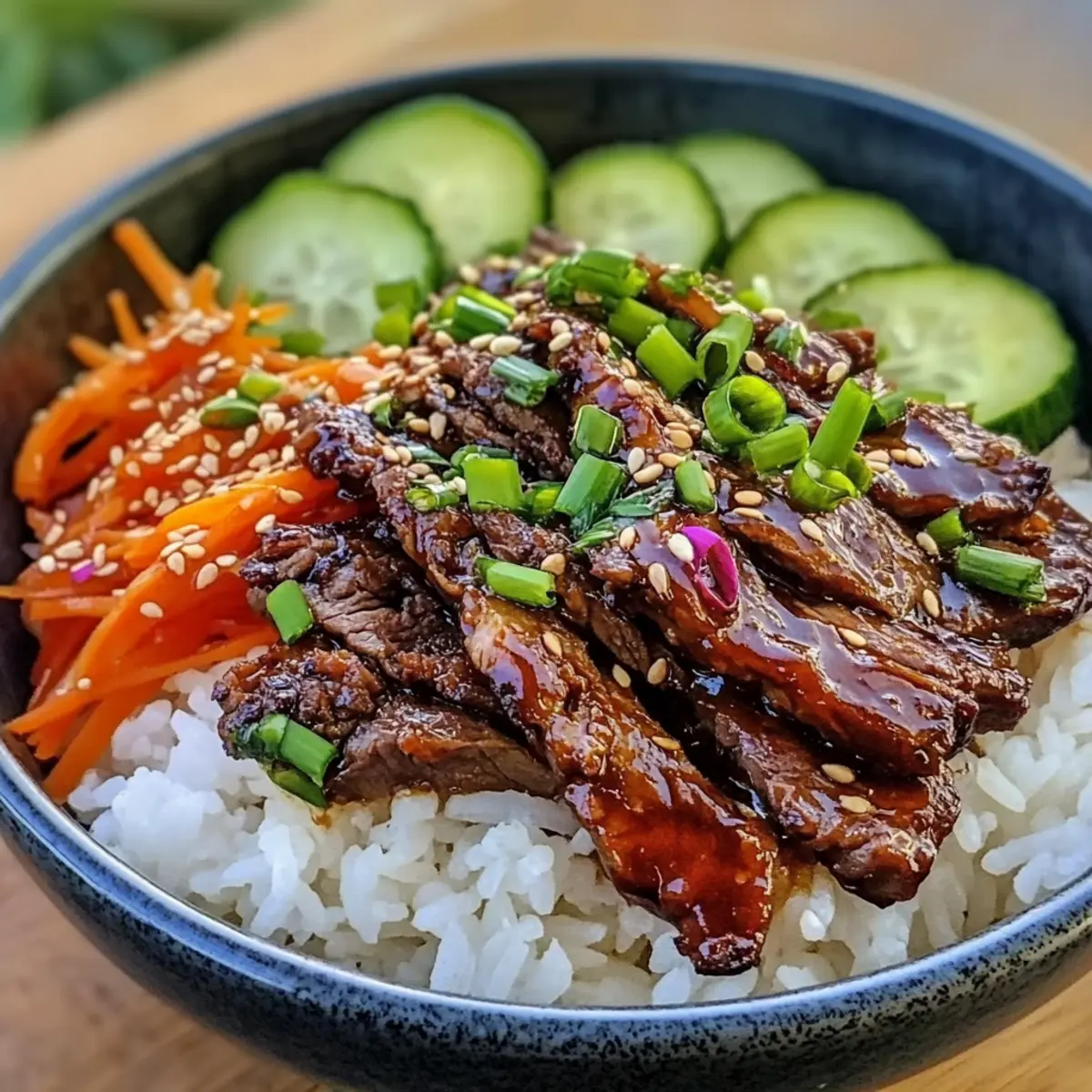
Sweet and Savory Korean Beef Bulgogi Rice Bowl in 30 Minutes
Ingredients
Equipment
Method
- Begin by peeling and thinly slicing your carrots and cucumbers. In a small saucepan, combine rice vinegar, sugar, salt, and water over medium heat. Stir until dissolved, about 2-3 minutes.
- Pour the hot brine over the sliced vegetables and allow them to pickle at room temperature.
- In a mixing bowl, whisk together low-sodium soy sauce, brown sugar, minced garlic, grated ginger, sesame oil, and chopped green onions to create the marinade.
- Thinly slice the ribeye or sirloin against the grain for tenderness and add it to the marinade.
- Marinate for at least 10 minutes while cooking the rice.
- Prepare rice according to package instructions, typically taking about 15-20 minutes.
- Preheat a large skillet over medium-high heat and sear the marinated beef in batches until caramelized and tender.
- To assemble, place warm rice in bowls, topped with seared beef and quick pickled vegetables.
Leave a Reply